

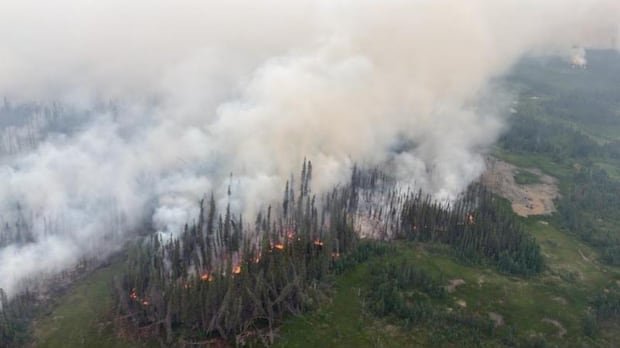

A climate expert warns that the window for constructing a major infrastructure project in the Northwest Territories is narrowing due to longer fire seasons, larger fires, and melting permafrost. The federal government recently announced a halt in work on the Mackenzie Valley Highway due to uncontrollable wildfires in the region. The project aims to connect remote communities from Wrigley to Inuvik.
Ze’ev Gedalof, a climate scientist at the University of Guelph, emphasizes that wildfires have become a recurrent issue in the N.W.T., posing challenges for construction activities. He also notes the shorter ice road seasons during winter, impacting material transportation.
Recent data shows over 200 active wildfires in the N.W.T., with many considered out of control. A study by the World Weather Attribution predicts that such wildfire events may occur every two to six years in the current climate, compared to less than once every 40 years without climate change.
The Mackenzie Valley Highway, envisioned to enhance the region’s living standards and assert sovereignty, faces uncertainties amid escalating wildfire seasons. While authorities like Rebecca Alty and Eleanor Olszewski acknowledge the impact of climate change on wildfires and stress the need for preparedness and public communication, the future of the highway remains uncertain.
Premier R.J. Simpson underlines the significance of completing the highway, expressing concerns about its failure. He remains hopeful for full construction to commence next year, despite the challenges posed by wildfires.