

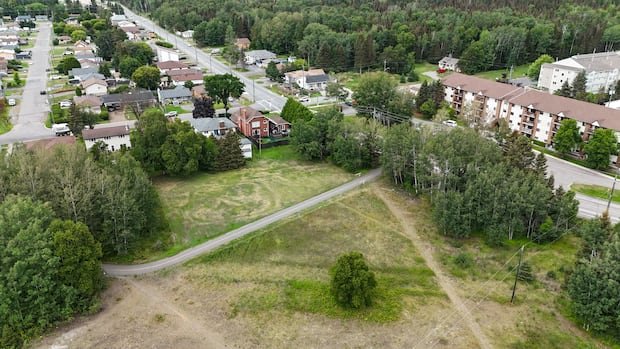

Lori Santink expresses disappointment but not shock over the city council’s recent decision to rezone two empty lots for new housing projects in Thunder Bay, Ontario. Santink, who resides near 791 Arundel St., one of the properties sold to Terralux General Contractors and Development Limited, acknowledged Thunder Bay’s urgent need for approximately 1,000 more housing units to meet demand.
Pending approvals, the city could potentially see over 900 new housing units constructed, including 360 units in two apartment buildings at 791 Arundel St., 150 units in an apartment building at 144 Fanshaw St., and 400 units in two apartment buildings at 300 Tokio St. While the proposals for Arundel and Fanshaw streets required rezoning approval by the city council, the Tokio Street property already had the appropriate zoning.
Critics like Santink argue that the Arundel Street proposal contradicts the city’s Net-Zero Strategy and Climate Adaptation Strategy. She, alongside the grassroots group TBay Greenspace Preservation, which boasts over 500 followers, collected more than 2,600 signatures in a petition opposing the developments. They also organized a rally outside city hall that drew more than 100 participants.
The concerns raised by the group include the potential loss of green space, the strain on aging sewer infrastructure, increased traffic without adequate access to public transportation in winter, and the risks posed to local species like the yellow-banded bumblebee, Canadian warbler, and grey fox. The implementation of Ontario’s Bill 60 means that residents can no longer challenge municipal council decisions through the Ontario Land Tribunal, leaving judicial review as the only recourse.
Devon McCloskey, Thunder Bay’s manager of planning services, mentioned that the city is awaiting the developer’s applications for site plan control and building permits before commencing construction. The developer has reportedly made adjustments to address public concerns and accommodate feedback. These projects align with the city’s Smart Growth Action Plan by offering diverse housing options and utilizing underutilized public lands for sustainable growth.
Coun. Andrew Foulds, representing the Current River ward where 791 Arundel St. is situated, opposed the property’s rezoning but commended the significant public engagement on the matter. Leia Minaker, an associate professor at the University of Waterloo, emphasized the importance of transparent communication and understanding the impacts of urban developments amidst varying community opinions and concerns.
Minaker highlighted common worries related to new housing projects, such as traffic congestion, parking shortages, privacy infringements, shadows cast by tall buildings, and changes to neighborhood dynamics. She emphasized the challenge facing northern cities like Thunder Bay in planning for growth amid projected population increases from economic activities in the region.
Santink intends to closely monitor the developments and calls for increased public awareness and communication from the city throughout the process to ensure transparency and community involvement.