

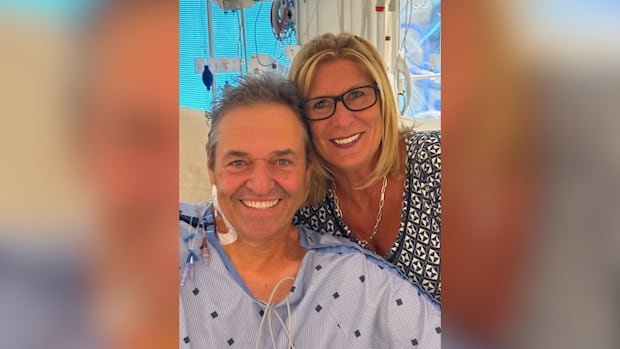

A man from Quebec, aged 64, has made history in North America by becoming the first recipient of a regenerated liver. This innovative technology has the potential to increase the availability of transplantable livers by several dozen in its inaugural year. Gérard Landry, a resident of Nouvelle in Quebec, had been battling liver issues for around 15 years, which eventually led to cirrhosis and liver cancer.
Before Landry underwent surgery for a liver transplant, his doctor revealed that the liver had been regenerated using a new machine, a groundbreaking development at the Centre hospitalier de l’Université de Montréal (CHUM) in Montreal. This technology, known as Liver Assist, enables medical professionals to assess and treat a donated liver outside the body before transplantation, making it possible to consider organs that may have been deemed too risky previously.
Dr. David Hénault, a specialist in liver transplantation at CHUM, spearheaded the project and conducted Landry’s surgery. The Liver Assist system functions by connecting a donated liver to a machine that circulates an oxygen-rich fluid through the organ, aiding in reversing damage caused by oxygen deprivation during the organ’s external preservation.
According to Dr. Hénault, the machine plays a crucial role in determining the liver’s functionality in conditions mimicking the human body. This technology has the potential to recover livers that were previously declined for transplantation, as demonstrated by a study conducted in collaboration with Transplant Québec. It is estimated that the Liver Assist system could increase the number of available livers for transplant by 20 to 24 in its initial year of implementation, with further growth expected as the technology becomes more widespread.
Moreover, studies indicate that this innovative approach can reduce complications, reoperations, and hospitalization durations for suitable patients. Landry’s post-transplant progress showed promising signs immediately, with his blood work surpassing expectations the day after the surgery. Dr. Hénault believes that the new machine significantly contributed to Landry’s successful outcome.
As Landry continues his recovery in Montreal, with frequent hospital visits for monitoring, he eagerly anticipates returning to Gaspésie once he is fully healed. His experience serves as a testament to the importance of organ donation discussions within families, emphasizing that advanced technologies only prove beneficial when supported by a supply of donated organs. Landry’s optimism and gratitude highlight the transformative impact of medical advancements in enhancing the quality of life for individuals in need of life-saving transplants.