

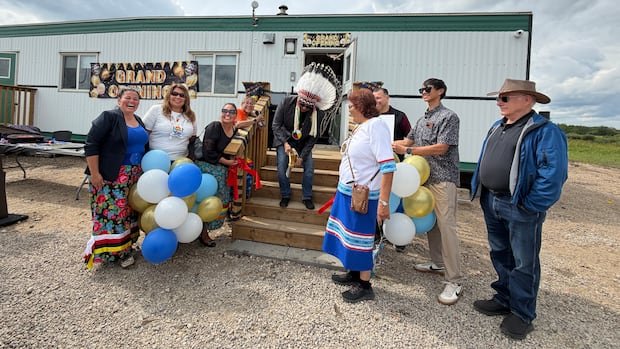

A newly opened women’s shelter in northeastern Alberta is providing crucial support to vulnerable members of a First Nation community while emphasizing connection to community and culture.
Cold Lake First Nations (CLFN), situated approximately 280 kilometers northeast of Edmonton, celebrated the grand opening of its inaugural women’s shelter on Monday. Women began moving into the shelter the following day.
Each room in the shelter is uniquely decorated and equipped with a bed, care packages, towels, a desk, and other essential items. Terry Martial, the CEO of the Horelyu Dene Ts’edi Kue Society, a non-profit organization offering community wellness, cultural support, and social programs for CLFN, highlighted the shelter’s significance as a safe haven for women in need.
Addressing local women’s homelessness was a primary motivation for establishing the shelter, as Martial emphasized, “Our women need to be protected; they’re the backbone of any nation.”
The facility features seven bedrooms, a communal kitchen, and living area stocked with books, games, and yoga equipment, according to shelter manager Tempest Lapatac. Programming such as healing circles, cultural teachings, language classes, gardening, and meal planning will be provided by staff, elders, and community members.
The shelter aims to create a homely environment that fosters independence among residents. Lapatac explained, “They’ll cook for themselves, they’ll clean after themselves. It’s like a home for them.” Women are permitted to stay at the shelter for up to 30 days.
Residents staying at the shelter are expected to engage in case management plans and can access services such as addiction counseling, mental health support, educational opportunities, and job training to facilitate their progress towards personal goals.
CLFN Chief Kelsey Jacko expressed his satisfaction with the shelter, emphasizing the importance of enabling women to stay connected to their culture and families while ensuring their safety.
The shelter’s establishment was a collaborative effort involving community members, leadership, and staff responding to the needs of struggling women in the community. Councillor Jacinta Janvier shared her hope for the shelter to provide a safe and nurturing environment for women and families, enabling them to thrive and move forward positively without fear of abuse.
The shelter represents a beacon of hope and a pathway to a better quality of life for those accessing its services.