

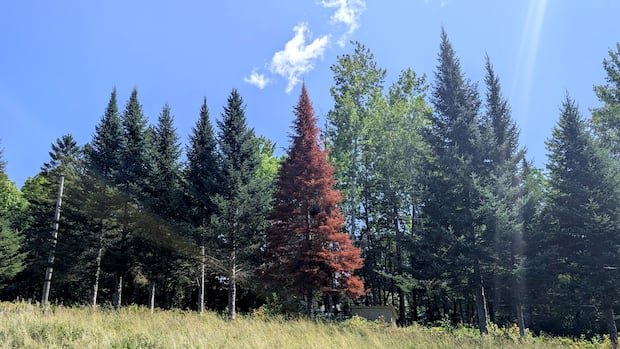

In New Brunswick, balsam fir trees are exhibiting a concerning phenomenon of turning red and dying due to the previous summer’s severe drought, sparking worries about the survival of this iconic provincial tree. Professor Anthony Taylor, a forestry researcher at the University of New Brunswick, has been closely monitoring the situation, noting how the typically lush evergreens, often sought after for Christmas trees, are gradually succumbing to the adverse effects of the drought.
Taylor’s extensive research on climate change’s impact on New Brunswick’s forests has revealed a recurring pattern where balsam fir trees suffer die-offs following exceptionally hot and dry summers, as seen in 1986 and 2018. He explains that the warm, dry conditions experienced during droughts hinder the balsam fir trees’ growth capabilities.
The detrimental effects of drought lead the trees to prematurely halt the photosynthesis process, depriving them of essential energy reserves needed for vital functions, such as producing defense compounds. This puts the trees at a heightened risk, particularly when already under stress from factors like pests or diseases, increasing the likelihood of widespread die-off.
Additionally, the balsam fir trees’ shallow root systems pose a challenge in accessing sufficient water during prolonged dry spells, exacerbating their vulnerability to environmental stressors. Local woodlot owner Peter McKeil has witnessed the devastating impact firsthand, observing the gradual reddening and demise of numerous trees on his property since June, with no signs of the die-off abating. Despite salvaging some of the deceased trees for lumber, McKeil has adjusted his harvesting practices to maximize the remaining fir trees’ value before further losses occur.
McKeil expresses deep concern over the future of the balsam fir species, particularly in southern New Brunswick, attributing the heightened climate change effects to their grim fate. He emphasizes the urgent need for climate action, echoing Taylor’s sentiments that the visible damage to the balsam fir trees serves as a stark reminder of the escalating environmental crisis. Taylor underscores the necessity for immediate measures to curb fossil fuel consumption and unsustainable forestry practices to mitigate the adverse effects of climate change on the region’s iconic tree species.