

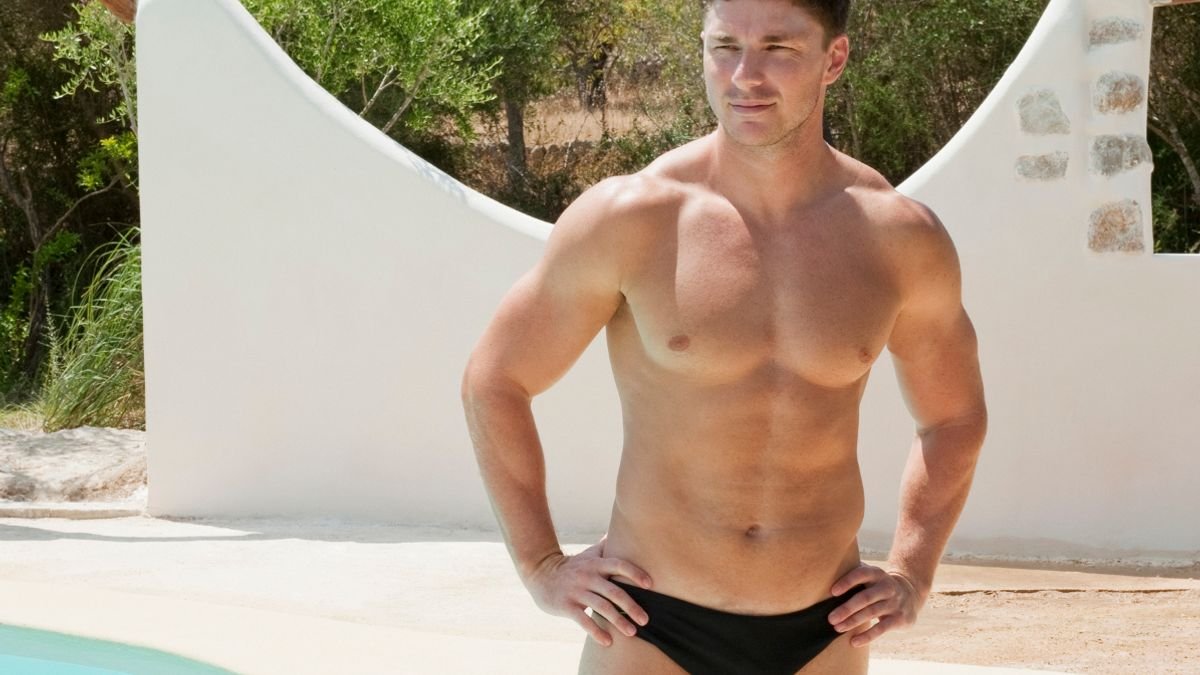

Before taking a plunge in France, holidaymakers are advised to reconsider, according to a travel expert.
If you are looking forward to swimming at one of France’s more than 6,000 public pools this year, travel specialist Simon Hood has a cautionary message. France is renowned for its fine wines, fashion, and romantic allure. It attracts an estimated 9-13 million Brits annually to its beloved cities like Paris and the glamorous Riviera.
Despite being the European Union’s second-largest economy, a little-known health regulation in France could disrupt many British vacation plans. Simon, the executive director of John Mason International, highlights the importance of following this rule to avoid being barred from swimming during your trip.
Most public pools in France, with a network exceeding 6,000 pools and open-air basins, enforce a strict hygiene regulation concerning men’s swimwear, believed to originate from 1903.
French local authorities mandate that men must wear ‘tight-fitting swimwear,’ such as Speedos, at public pools. Failure to comply with this rule, which is enforced by local municipalities or the ARS (French regional health authorities), could result in being refused access to the pool.
Although Speedos may not be trendy internationally, they are a necessity for men at public pools in major cities like Paris, Lyon, and Marseille.
Simon elaborated, stating, “Non-compliance with these hygiene regulations could lead to being escorted out of the pool, leaving you stranded while your family or friends enjoy the water. While most pools offer suitable swimwear for purchase, it could cost you around €10-€20, an unnecessary expense. Hence, it’s advisable to check if you need appropriate swimwear before your visit.”
While some may view this regulation as outdated and unenforced, Simon explains its origins from a hygiene standpoint.
“The rule is rooted in concerns about pool hygiene. It was implemented due to the cultural practice in France where people wear swimwear outside before entering the pool during the summer, potentially bringing in dirt. This contrasts with the UK, where people do not roam outdoors in swim trunks, making the rule seem peculiar. However, local authorities aim to maintain pool cleanliness,” Simon clarified.
Eurocamp, a major holiday park chain with numerous locations in France, provides guidance on its website, indicating that beach attire is unrestricted, but many pools enforce rules against loose-fitting shorts for hygiene reasons.
The website adds that wearing tighter swimwear conserves water, dries faster, and reduces bacteria buildup. It suggests opting for fitted swimming shorts above the knee made from water-friendly fabrics like ‘jammers.’
There are no indications of relaxation in these rules in the near future. In May 2022, Grenoble’s municipal authority tried to relax these restrictions, but the central government in Paris intervened to maintain the status quo.
Simon emphasized the importance of researching in advance to understand these regulations and suggested either complying with the swimwear rule or choosing a pool with different requirements. He noted that while Speedos might not be trendy, missing out on a pool day due to attire choices could be disappointing.