

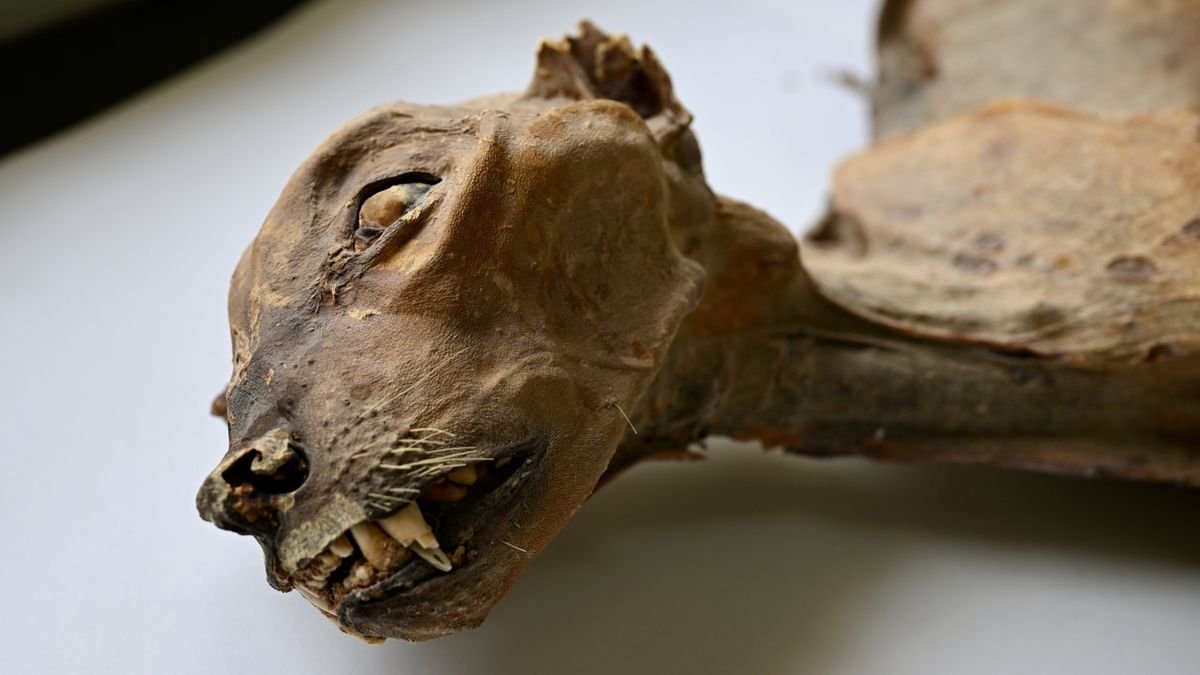

Ancient cheetah remains, ranging from 130 to 1,800 years old, were unearthed in a cave by researchers in Saudi Arabia. The discovery included seven mummified cheetahs and the bones of 54 others near Arar city. Experts are intrigued by the find, speculating that it may have been a denning area for cheetahs to give birth and raise their offspring.
Mummification, a process that halts decay by preserving deceased bodies, has been observed in various natural settings such as glacier ice, desert sands, and bog sludge. Notably, the mummified cheetahs exhibit features like clouded eyes and desiccated limbs, resembling dried-out husks, which has puzzled researchers.
Joan Madurell-Malapeira from the University of Florence expressed astonishment at the discovery, highlighting its uniqueness. Additionally, the study of the mummified big cats’ genes revealed a genetic similarity to present-day cheetahs from Asia and northwest Africa, offering insights that could aid future conservation efforts.
Furthermore, a recent archaeological finding near the Nissan car plant in the UK unveiled evidence of a Roman industrial hub along the River Wear. The site at Offerton, near Sunderland, yielded over 800 whetstones and 11 stone anchors, supporting the presence of Roman activity in the region. Volunteers from the Vedra Hylton Community Association made the discovery, shedding light on the historical industrial significance of the area within Roman Britain.