

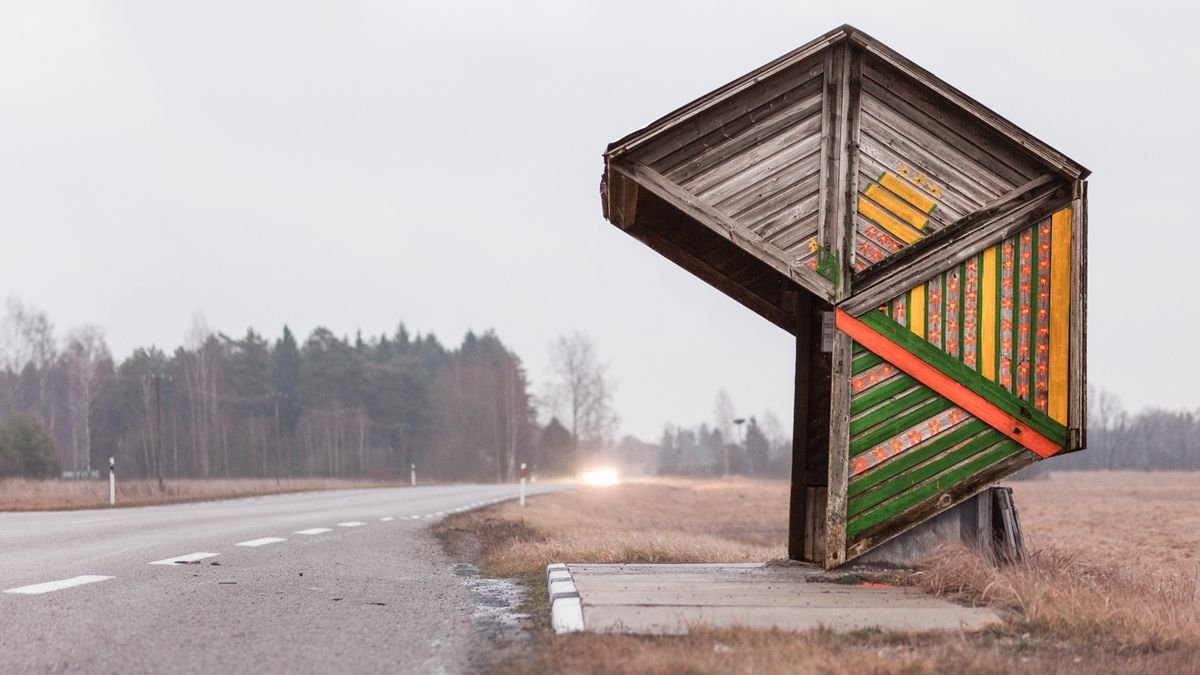

At bus stops in the UK, it’s common to see chewing gum, graffiti, and uncomfortable benches meant to deter loitering. In contrast, former Soviet Union countries boast unique and artistic bus stops scattered throughout their rural landscapes. These countries, including Kazakhstan, Turkmenistan, Uzbekistan, and others, showcase a blend of creativity and historical remnants from the Soviet era in their public transport infrastructure.
During a recent visit to Moldova, the Mirror’s Jonathan Reynolds was captivated by the country’s distinctive bus stops. Moldova, known as the poorest country in Europe, surprises visitors with its rich array of creatively designed bus shelters. Inspired by a book on Soviet bus stops, Jonathan set out early one morning to explore Moldova’s countryside and document these architectural gems.
The photographer behind the book “Soviet Bus Stops,” Christopher Herwig, embarked on a journey across former Soviet countries to capture the essence of these unconventional structures. His encounters with unique bus stops in various nations led him to delve into the history and design behind these roadside marvels.
Architects like George Chakhava, known for his eclectic work in Georgia, contributed to the diversity of bus stop designs. From intricate mosaic stars to concrete animal motifs, these bus stops reflect regional pride and artistic expression rather than just communist ideals.
Despite some appreciation for these artistic creations, some locals view these bus stops as eyesores, leading to mixed reactions within the communities. Christopher’s exploration of these bus stops sheds light on the intersection of functionality and artistry in public infrastructure across the former Eastern Bloc.
For more insights into Christopher’s work and to explore these unique bus stops further, his book is available online. You can also follow his photography journey on Instagram for a visual tour of these unconventional roadside attractions.