

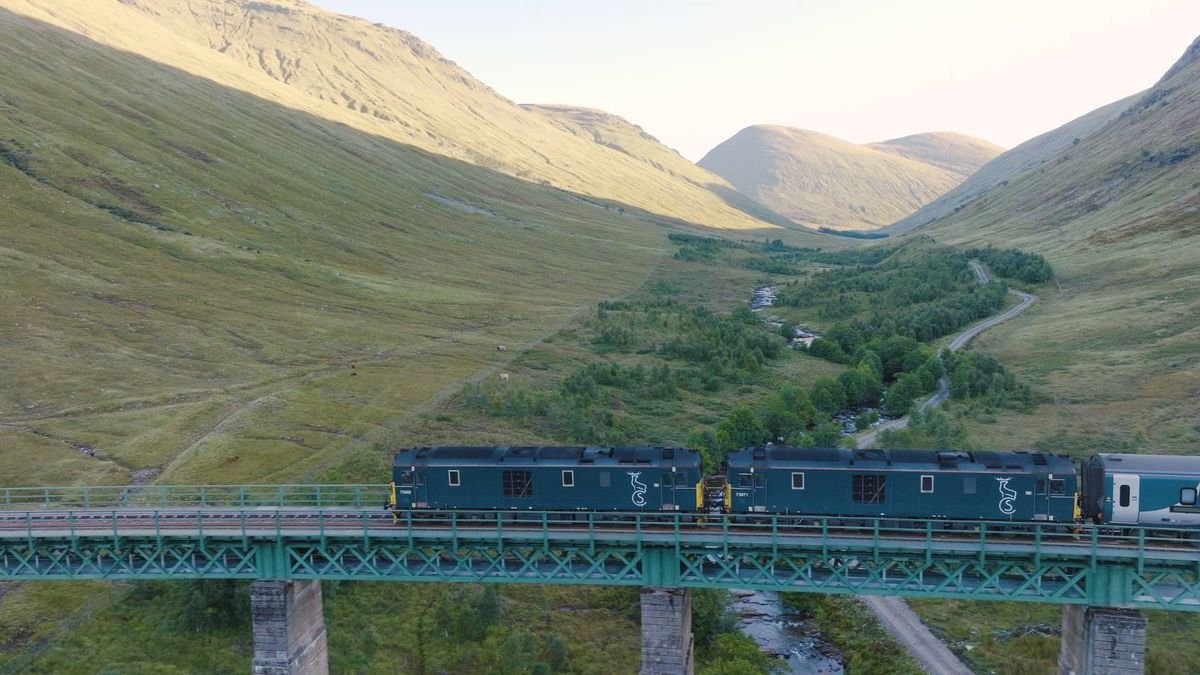

The head of the renowned Caledonian Sleeper has suggested potential future destinations as the train embarks on journeys departing from Birmingham.
Recently, the Sleeper made its first stop at Birmingham International, picking up passengers at 10.44 pm before heading to Scotland. This marked a significant moment for Caledonian Sleeper as the first sleeper service connecting Birmingham to Scotland in thirty years. Managing Director Graham Kelly mentioned that discussions were ongoing about introducing additional stops, with Manchester being a possible consideration due to its strategic location on the London Euston to West Scotland line.
Kelly emphasized that the main challenge in adding Manchester as a stop was coordinating schedules to ensure optimal timings for passengers. He indicated potential arrival times around 1 am going north and 4.30 am heading south.
When it comes to expanding to other destinations, Kelly hinted that Scottish locations were the most likely targets for future growth, with plans possibly materializing in the rail years 2026/27 or beyond 2030.
At present, Manchester lacks sleeper train services, making the potential extension of the Caledonian Sleeper to the city an attractive overnight alternative for travelers heading to Scotland or London.
The recent service from Birmingham featured a traditional Scottish performance by renowned bagpiper Lorne MacDougall. Notable railway enthusiast Francis Bourgeois was among the inaugural passengers traveling to Inverness.
Kelly commended the hard work and collaboration within the industry that made the inclusion of Birmingham in the current timetable possible without requiring additional rolling stock. He highlighted the environmental benefits of the Sleeper, emitting significantly less CO2 compared to car and air travel.
Operating at 90% capacity in 2025, the addition of the Birmingham stop is anticipated to bring the service closer to full capacity without an increase in ticket prices. Addressing the seating issue, Kelly explained the limitations imposed by UK rail standards but mentioned adjustments like dimming cabin lights based on customer feedback to enhance the journey experience.